CompetifyHub Research Institute: Kokonda Lab
Principal Investigator: Satya Kokonda
Lab Overview & Mission The Kokonda Lab operates as the primary computational research division within CompetifyHub, a global 501(c)(3) nonprofit. The lab specializes in the intersection of artificial intelligence, high-throughput computational chemistry, and rational materials design. Our primary objective is accelerating the discovery of advanced materials for environmental remediation, translating predictive models into deployable ecological solutions while maintaining a strict open-science mandate.
Synergy with CompetifyHub As a research entity embedded within an international STEM-access nonprofit, the Kokonda Lab operates with a dual mandate: advancing high-level computational research and democratizing the scientific process. PI Kokonda utilizes the lab’s sophisticated workflows—from machine learning pipelines to rational catalyst design—as living blueprints for the global CompetifyHub community. By openly sharing the methodologies behind projects like MatCreatioNN, the lab empowers the next generation of students to engage in rigorous, AI-driven scientific discovery.
Current Research Focus The lab’s portfolio is defined by the intersection of artificial intelligence and rational materials design, with a strong emphasis on bioremediation and sustainable chemistry.
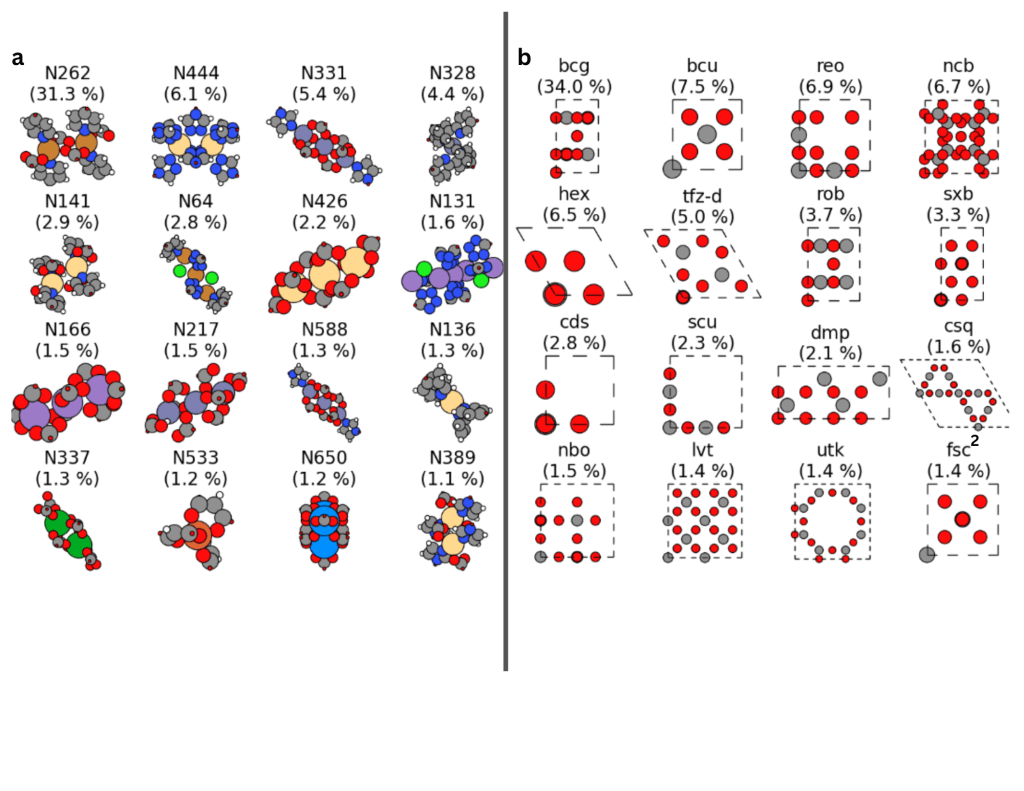
- Generative AI for Metal-Organic Frameworks (MOFs): We utilize advanced machine learning architectures (including graph neural networks) to navigate the vast chemical space of theoretical MOFs. By mapping structure-property relationships, the lab predicts thermodynamically stable, high-surface-area frameworks optimized for targeted gas separation and pollutant adsorption, bypassing traditional trial-and-error synthesis bottlenecks.
- MatCreatioNN & Photocatalyst Discovery: The lab developed and maintains MatCreatioNN, a proprietary machine learning pipeline designed for the rapid computational screening of novel photocatalytic materials. This platform predicts critical parameters—such as bandgap energies and charge carrier dynamics—to identify optimal catalysts for the degradation of recalcitrant organic compounds via Advanced Oxidation Processes (AOPs).
Methodology & Tech Stack
- Techniques: Machine Learning (Predictive & Generative Models), Density Functional Theory (DFT) integration, High-Throughput Virtual Screening (HTVS).
- Applications: Bandgap engineering, rational catalyst design, pollutant degradation pathways.
Open Science & The CompetifyHub Synergy Operating under a dual mandate of rigorous scientific discovery and STEM democratization, the Kokonda Lab is committed to open-source principles. We design our computational workflows to be reproducible and accessible. By publishing our machine learning models, datasets, and platforms like MatCreatioNN, we provide living blueprints that empower students and researchers globally to engage in AI-driven materials science.
Data Access & Collaboration: For access to our computational models, open datasets, or to explore joint research initiatives, please visit the CompetifyHub Open Science Portal or review PI Kokonda’s published literature via Google Scholar.

